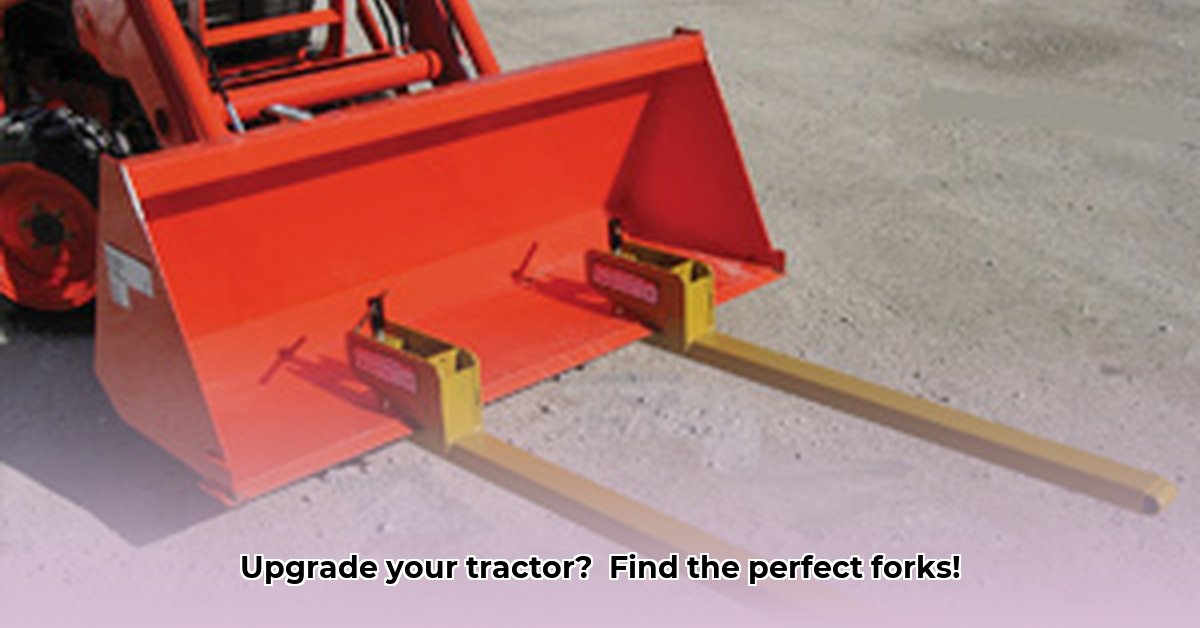
Finding the right tractor clamp-on forks can significantly improve your farm's efficiency and safety. But with numerous options available, choosing the best fit requires careful consideration. This comprehensive guide simplifies the process, equipping you with the knowledge to select, install, and maintain your forks effectively. We'll address a persistent issue: the lack of readily available, detailed specifications from many manufacturers – a gap this guide aims to bridge. For even more resources, check out this helpful website.
Understanding Tractor Clamp-On Forks
Tractor clamp-on forks are attachments that transform your tractor into a versatile material handling machine. They quickly attach to your tractor's loader arms, enabling efficient movement of pallets, hay bales, and other bulky materials. Their removable nature allows adaptability for various farm tasks, unlike integrated fork systems. This flexibility makes them a highly valuable investment.
Types of Tractor Clamp-On Forks
The market offers a range of clamp-on forks, each with varying specifications. Understanding these differences is key to making an informed decision:
Size: Fork length directly impacts the size of pallets you can handle. Ensure compatibility with your tractor's loader and the materials you'll typically move.
Material: While most forks are constructed from robust steel, high-strength alloys provide superior durability, especially for heavy or abrasive materials. The choice depends on the typical weight and nature of your loads.
Load Capacity: This is crucial for safety. Always select a capacity that significantly exceeds your heaviest anticipated load. A substantial safety margin is paramount.
Features: Some forks include adjustable stabilizers for increased stability during lifting and transport, significantly reducing the risk of tipping. Others may incorporate additional safety mechanisms.
The lack of readily available detailed specifications from manufacturers often hinders informed decision-making. This guide aims to help navigate this challenge.
Choosing the Right Tractor Clamp-On Forks: A Step-by-Step Guide
Selecting the ideal forks involves a structured approach:
Step 1: Assess Your Needs: What will you primarily lift? Determine the maximum weight and dimensions (length, width, height) of your typical loads. Overestimation is better than underestimation.
Step 2: Check Your Tractor's Capacity: Consult your tractor's owner's manual for essential information about your loader's lift capacity and safe reach. Overloading is dangerous and must be avoided.
Step 3: Budget Considerations: Factor in the initial cost and potential maintenance expenses. While higher-quality forks may cost more upfront, their longevity often results in long-term savings.
Step 4: Directly Contact Manufacturers: This is crucial for obtaining detailed specifications. Request precise information on weight capacity, material composition, dimensions, and safety features. Don't hesitate to ask clarifying questions.
Step 5: Analyze Online Reviews (with Caution): Although online reviews offer valuable insights, remember that individual experiences can vary. Corroborate information with other sources always.
Safe Installation and Operation: A Prioritized Focus
Safe operation is paramount. Never compromise on safety procedures:
Step 1: Precise Attachment: Adhere strictly to the manufacturer's instructions during installation. A loose connection can have catastrophic consequences.
Step 2: Strict Adherence to Weight Limits: Never exceed the stated load capacity of the forks or your tractor's lifting capacity.
Step 3: Ensuring Stability: Securely attach the forks before lifting. Double-check the connection for any looseness.
Step 4: Controlled Lifting Techniques: Lift loads smoothly and slowly, avoiding abrupt movements that could risk instability or damage.
Step 5: Regular Visual Inspections: Routinely inspect the forks for wear, damage, or loose connections. Replace damaged components immediately.
Step 6: Preventative Maintenance: Regularly lubricate moving parts and perform visual inspections. Addressing issues promptly minimizes more-serious problems.
Maintenance and Troubleshooting: Extending Fork Lifespan
Consistent maintenance is key to maximizing the lifespan of your forks:
Regular Lubrication: Lubricate moving parts (pins, clamps) to ensure smooth operation and reduce wear.
Frequent Inspections: Regularly inspect for cracks, damage, loose bolts, or bent tines.
Prompt Repairs: Address any observed problems immediately to prevent escalation.
Proper Storage: Store forks in a dry, protected area when not in use to prevent corrosion.
Finding Additional Resources
While this guide provides a valuable foundation, remember that comprehensive details are sometimes scattered. Always refer to the manufacturer's specifications for the most accurate and up-to-date information on any fork you are considering. This ensures you make the safest and most informed choices. Safe and efficient operation relies on thorough planning and a strong commitment to safety.